From Candy Land to Courage: How Stories Help Us Through
 The Sweet Story Behind Candy Land
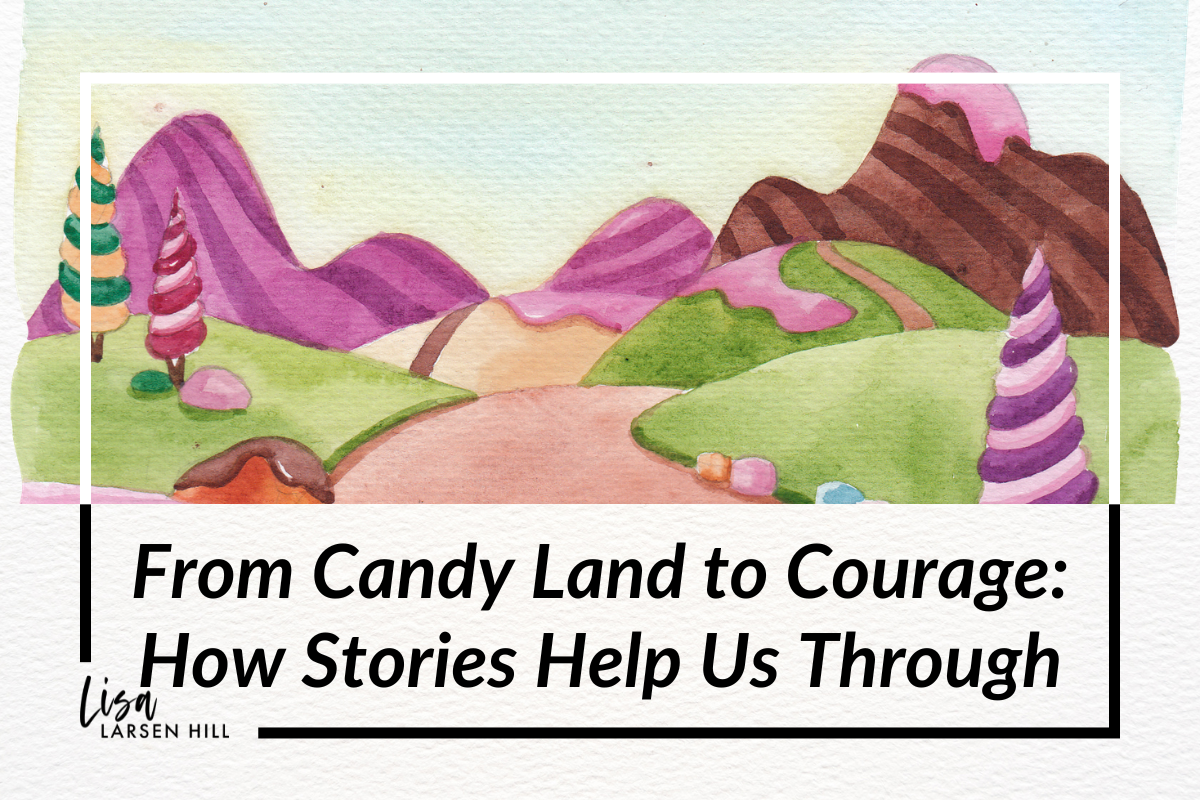
My husband recently cut out an article for me about the woman who created Candy Land, and the story brought back ‘sweet’ memories. I remember playing it for hours with my brother, visiting delightful places like Gumdrop Mountain, Ice Cream Floats, and Peppermint Stick Forest.
Can you guess how many households in America have this game? You’d be right if you said 60%.
Creating Joy Amid Suffering
The inventor, Eleanor Abbott, was a teacher who contracted polio in 1948 in her late 30s. At the time, polio was an epidemic, mainly affecting children under five, who would be quarantined, alone without family and friends.
Seeing how these young children were suffering, she began to imagine a way to bring them joy.
Using butcher paper, she created a winding path filled with colorful, sweet destinations. She designed the game so even the youngest children could play without reading. The rules were simple: pick a card and move your token to the matching color or picture. Another rule was the youngest always went first.
When she brought the game to the ward where she had been treated, the children loved it.
She approached Milton Bradley, who was eager to compete with Parker Brothers’ popular games like Monopoly and Scrabble, and they picked it up. Candy Land became one of the most iconic and successful children’s games of all time, selling over 75 million copies. Eleanor donated much of her profits to support children with polio and to fund school equipment and supplies.
What a beautiful story of one woman’s response to suffering that little did she know would bring joy to generations.
When Hardship Becomes Perspective
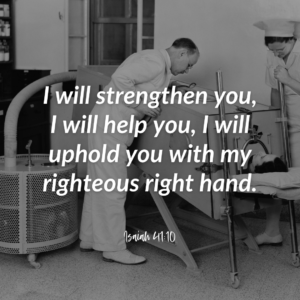
I was reminded of one of the elders in our church telling us about how he had polio as a child and lived in an iron lung for over a year. But then, to the applause of the doctors and nurses, he walked out on his own after fourteen months and went on to live a long life devoted to serving others through charity work.
Recently, I injured my knee in a ski accident and tore my MCL. I now wear a heavy metal brace 24/7. I’m in my second week of three before PT where I need to rest, keep my leg elevated, and ice it regularly. It’s uncomfortable and limiting. Every time I reach for my crutches, I think about those who lived through polio—and how difficult it must have been.
 A Story That Heals
And then there are those God moments—when your daily devotion brings exactly what you need.
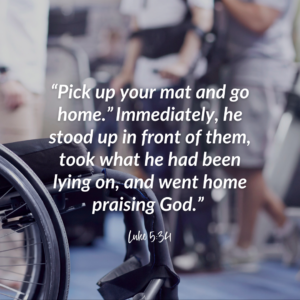
This week, it was the story of the paralytic.
Tom Boomershine, founder of NBSI (Network of Biblical Storytellers International), was once in a terrible car accident and told he would never walk again. His seminary friends would visit and repeatedly tell him the story of the paralytic. Months later, Tom regained his mobility. He later reflected on how powerful it had been to hear that story in his healing—an experience that became the impetus for founding NBSI, now in its 49th year.
The Stories That Carry Us
Stories are powerful. What we tell ourselves, what we return to in difficult moments, what becomes a beacon of light in the darkness—they shape us, steady us, and sometimes even carry us.
What story is speaking to you right now?
And how might it become part of your own story of courage, faith, and healing?
Sometimes, the stories we hold onto are the very ones God uses to carry us forward.